
Photo News · Kohima
I’ve learned you can read into a food system from the very first word people use for a dish.
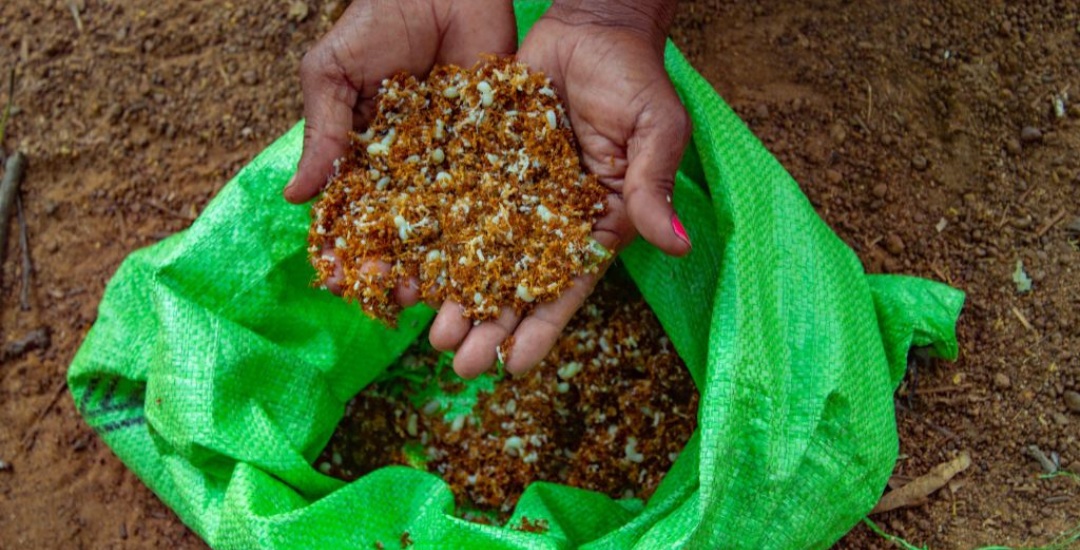
In parts of Odisha and Chhattisgarh, no one introduces chapda chutney with the performative pause I’m used to hearing in cities. Nobody called it “exotic.” Nobody tried to sell it to me as an adventure. It arrived with an easy, matter-of-fact kindness. More like, “of course you’ll have it.”
Places and perceptions
The funny part is, this wasn’t even my first encounter. I’d already tasted chapda at Dilli Haat, paired with Mahua flower pakoras. But every time I mentioned it back home, I watched faces change. Surprise first, then a half-second of doubt that usually arrived as, “But… you ate it?” That tiny pause is where the politics of edibility sits. Not in the ants, but in the inherited story we repeat about whose food is “clean,” and whose food is treated as a last resort instead of a choice.
Much later, watching MasterChef Australia felt oddly familiar. Television did what it does best: turned an ingredient into a storyline. Green ants became a “native” hero. Black ants appeared on dessert as a controlled provocation. The ants didn’t change, but everything around them did — the lighting, the language, the music of prestige.
I work in climate action, and I’ve sat through enough panels on “future foods” to recognise the pattern. We celebrate novelty when it arrives on a tasting spoon under soft lighting and dismiss it when it arrives in a steel bowl without a narrative escort.
Then, very recently, a friend told me she’d been served vinaigrette-preserved ants alongside her cocktail at AABBCC, a bar in South Delhi — one of those places that brands itself as a “museum of ingredients.” I couldn’t stop thinking about the distance between that moment and the one in a forested belt where chapda chutney is simply food. Same broad idea, wildly different politics. One invites applause for innovation, the other invites judgment for necessity.
It’s a pattern that repeats. Millets were “poor man’s grain” in urban India until the year they became a UN-endorsed superfood. Akhuni, the fermented soybean from Nagaland, was the reason families were evicted from metro flats over “smell complaints” — and is now beginning to appear on fermentation-forward menus as a hero ingredient. Quinoa was an Andean staple long before it appeared on the Whole Foods aisle. Kale was a peasant food. Lobster, in colonial New England, was reportedly fed to prisoners before it climbed the social ladder. Same ingredient, different lighting.
I work in climate action, and I’ve sat through enough panels on “future foods” to recognise the pattern. We celebrate novelty when it arrives on a tasting spoon under soft lighting and dismiss it when it arrives in a steel bowl without a narrative escort.
Also read: In search of vanishing grains
Nutrition, not just novelty
But chapda chutney isn’t a quirky dare. It’s a practical, nutritionally dense choice embedded in a living ecology — a good source of iron, calcium, zinc, and B12. When ground with green chilli and other vitamin-C-rich aromatics, it quietly enhances iron absorption. That’s technique, not accident.
Urban India, though, tends to collapse such foods into neat binaries: clean versus dirty, modern versus backward. But disgust is rarely neutral. It’s a boundary marker, shaped by caste, colonial notions of civility, and urban aspiration.
When someone wrinkles their nose at ants, they aren’t stating a universal truth about nutrition. They’re repeating an inherited script about whose food counts — and whose hunger is allowed dignity.
Here’s what those roadside conversations taught me, more than any conference has: the biggest barrier to climate-resilient diets isn’t availability. It’s status. The moment ants appear on TV as “restaurant-grade,” people suddenly acquire permission to be curious. Meanwhile, the communities who have eaten these foods for generations are still treated as if they are eating “wrong.”
On a hotter planet, humility is a climate strategy. If chapda chutney taught me anything on that road through Odisha and Chhattisgarh, it’s that the future of food may already exist — quietly, skillfully — in places we have been trained not to taste.
Also read: Preserving Tengesi, Assam’s cherished wild herb
The lead image on top shows red ant eggs that have been foraged to make a chutney. (Photo credit: Abhijit Mohanty )
As Climate Action Specialist at Transform Rural India Foundation, Anveshi Gupta designs systems that deliver ecological resilience and livelihood opportunities for climate-vulnerable communities, grounded in her conviction that real change happens where policy meets implementation meets community agency.