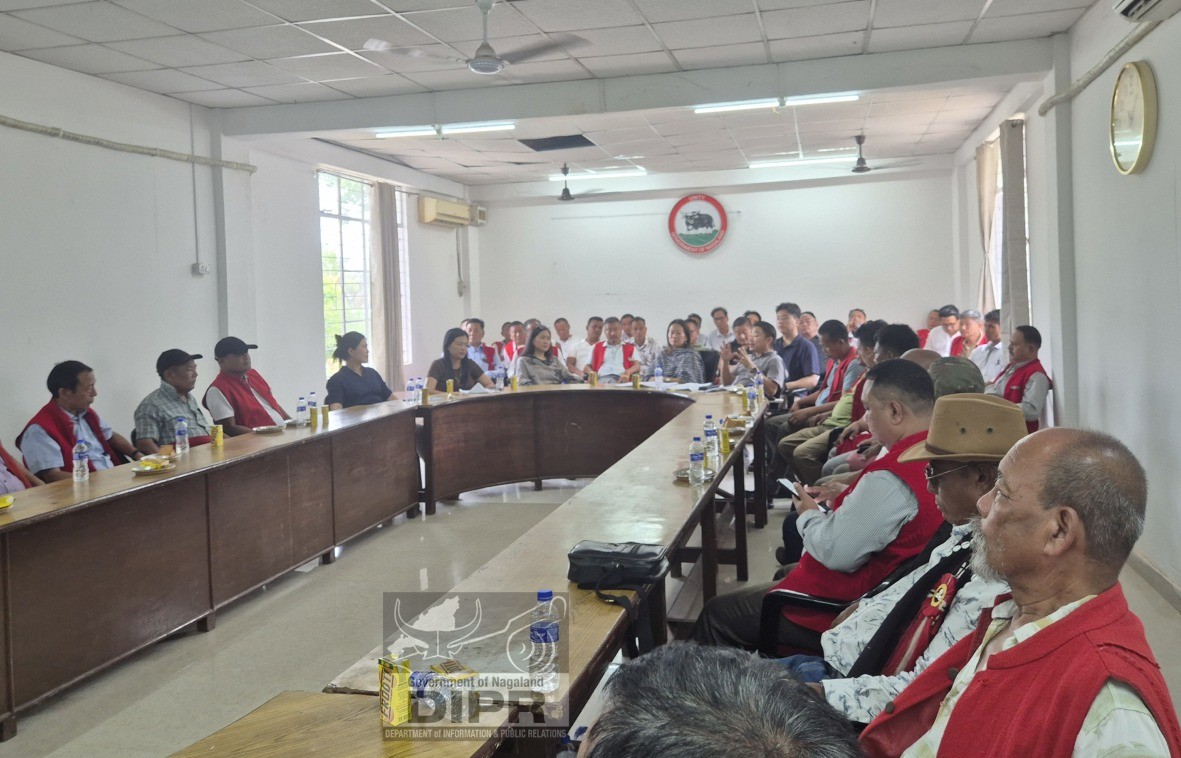
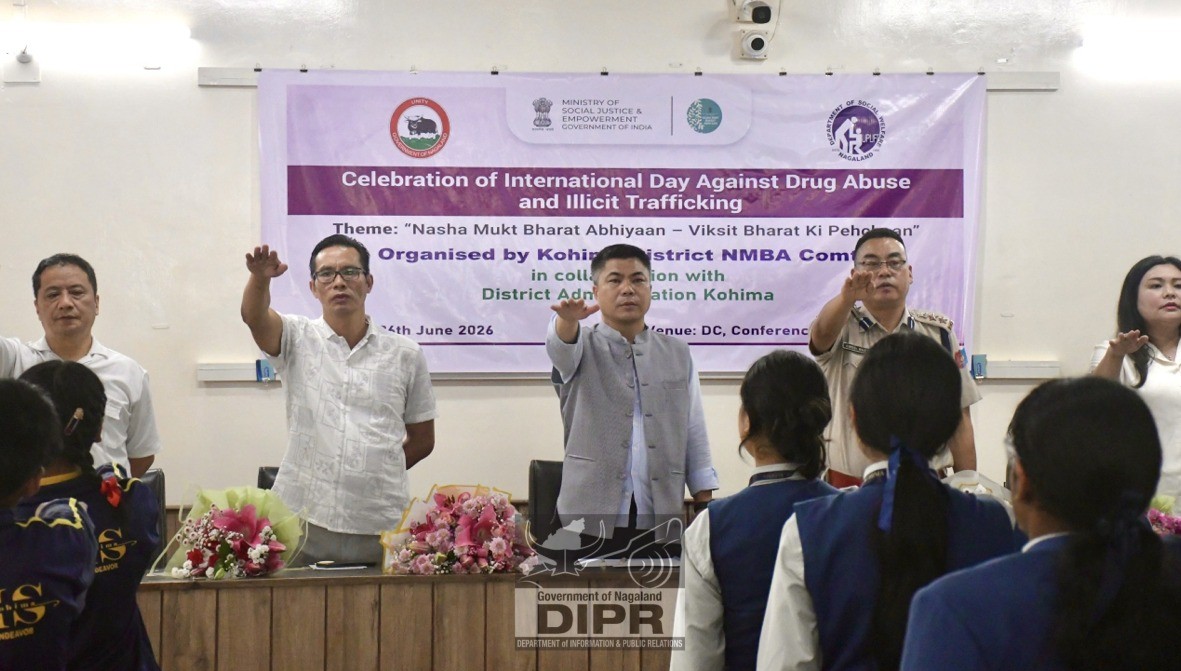
The District Nasha Mukt Bharat Abhiyan (NMBA) Committee, Kohima, in collaboration with the District Administration, observed the International Day against Drug Abuse and Illicit Trafficking on June 26 at the Deputy Commissioner’s Conference Hall, Kohima, under the theme “Nasha Mukt Bharat Abhiyaan, Viksit Bharat Ki Pehchaan.”
Deputy Commissioner and Chairperson of the District NMBA Committee, Kohima, B. Henok Buchem, NCS, in his keynote address, said young people are the best messengers of positive social change and urged them to become ambassadors against substance abuse. Sharing his visits to the district Jail, he said it was painful to see many young people there because of their involvement in drug abuse and trafficking, adding that addiction often begins with seemingly small habits before progressing to more dangerous substances.
He advised students never to experiment with drugs and encouraged them to guide their friends and family members away from substance abuse. Referring to the Nasha Mukt Bharat Abhiyan, he said the campaign is a coordinated national initiative aimed at creating a drug-free society through prevention, awareness, treatment and rehabilitation.
The Deputy Commissioner informed that over the past year, the district administration, in collaboration with departments and partner organisations, had organised anti-drug awareness lectures in schools, campaigns in government offices and villages, slogan and drawing competitions, workshops on relapse prevention, adolescent wellness programmes, student anti-drug clubs, seminars on substance use disorders, sensitisation programmes for law enforcement agencies, orientation programmes for healthcare workers, IEC campaigns and skill development programmes for recovering addicts.
Highlighting the changing social landscape, he said migration, unemployment and other socio-economic challenges have made young people more vulnerable to substance abuse. He urged the youth to remain focused on their goals and work hard towards building meaningful lives. Stressing that drug abuse undermines public health, safety and human dignity, he said the response should not be limited to punishing offenders but should also focus on prevention, treatment, rehabilitation and strong community support. He called upon all stakeholders to renew their commitment to building healthier families and safer communities free from the menace of drugs.
Senior Superintendent of Police, Kohima, Krodi Rhetso, said awareness remains the most effective tool in combating drug abuse and appreciated the various activities being carried out under the Nasha Mukt Bharat Abhiyan. Referring to the five-kilometre mini marathon organised earlier in the day, he said the participation of students, police personnel, government officials and members of the public reflected the collective commitment towards a drug-free society.
Expressing concern over the increasing prevalence of substance abuse among young people, he urged students to reject the misconception that experimenting with drugs is harmless. Highlighting the efforts of Kohima Police, Rhetso informed that during the past one and a half years, police had seized about 7.9 kilograms of heroin, 9.4 kilograms of brown sugar, 20.9 kilograms of opium, 238 bottles of cough syrup, around 400 strips of Nitrazepam tablets and more than 200 strips of Tramadol tablets, while registering over 33 cases under the NDPS Act. He said that although law enforcement agencies would continue taking strict action against traffickers, policing alone could not eliminate the problem, and called upon parents, teachers, churches, community leaders and citizens to work together in protecting the younger generation from drug abuse.
Delivering a presentation on “Women and Addiction,” Director of Life Connect Nagaland, Sali Kez Ngully, said the faith-based organisation is committed to empowering vulnerable and marginalised women through a holistic approach addressing their spiritual, emotional, physical and economic well-being. She said Life Connect has helped many women recover from alcoholism, substance addiction and involvement in the illicit liquor trade through counselling, rehabilitation, skill development and livelihood opportunities.
Describing addiction as a public health issue rather than a moral failing, she emphasised that recovery requires treatment, compassion and community support. She pointed out that many women battling addiction are also victims of trauma, abuse and poverty, making rehabilitation more challenging. She highlighted the organisation’s initiatives, including counselling, group therapy, vocational training, financial literacy, legal aid and its Life Kids programme, which supports children of women undergoing rehabilitation.
Ngully placed three proposals before the Government: recognising addiction as a public health issue, partnering with organisations to create livelihood opportunities such as paper bag production for women in recovery, and establishing a residential rehabilitation and vocational training centre where women can safely recover and rebuild their lives. She stressed that recovery is possible through partnership, acceptance and sustained community support.
A testimony was also shared by a woman recovering from alcohol addiction, who spoke about the challenges addiction had brought to her family and health and how Life Connect had helped transform her life. She will be serving as a peer mentor to support other women in recovery.
On the occasion, the Deputy Commissioner released “Voice of Hope,” an awareness video on addiction. The programme was chaired by District Welfare Officer, Department of Social Welfare, Imlitongzuk Ao, invocation was offered by Bendangtemsu, Pastor, NCBC, while the pledge and vote of thanks were delivered by Bendang Imsong, Project Coordinator, SLCA.
(Molungnenla, IA Kohima)